Broadband.io Survey: SBOs Skeptical that Non-Deployment Funds Will Remain
Today, we have part two of our survey results with a sample of forty-two SBO leads. Part one of our report looked at expected NTIA changes to final proposals. I would like to thank the state broadband leaders for trusting broadband.io and sharing some great insights, found nowhere else.
One hot topic in the “BEAD world” has been what becomes of the currently $21 - $22M in leftover (non-deployment) funding. NOTE: These numbers are from the ORIGINAL proposal postings.
nondeployment dollars per state.xlsxThe IIJA statute stated that excess dollars shall remain within states, so legally, these dollars should be available for infrastructure improvements as well as training. Theoretically.
Prevailing speculation is the Department of Commerce will take steps to ‘claw back’ BEAD funding through a Congressional process called rescission. The Trump administration, looking for budget cuts, has already used this to reverse $9B in funding for ‘foreign aid programs and public broadcasting.’
Why would states be asked to redo their proposals, cut budgets, and tighten belts if the money was only to remain in the states? It strains credulity.
Broadband leaders that I have spoken with informally say that they are dubious that, in spite of statute, the excess BEAD funding will remain within their state. So, instead of using generalities as to what states think and might do about the pending non-deployment (potential) fight, I asked them.
Speculating and to the best of your knowledge, how likely do you think it is that your state will (eventually) retain its non-deployment dollars remaining after your final proposal is approved?
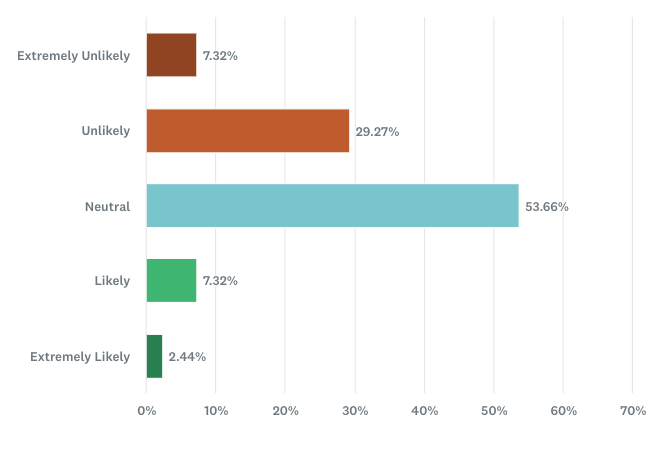
Half of the states simply cannot or would not speculate as to whether monies would stay with states. Only 10% thought it was likely that excess BEAD grant dollars would stay within their state while 37% said it is unlikely that they will have the opportunity to spend non-deployment dollars within their state.
This, as it turns out, isn’t currently legal without an act of Congress, a rescission of the funds. Or, as many speculate, the money could just sit in a fund, in a sort of grant purgatory.
Which begs the question, what are states going to do about this? Will they take action? We asked the states that said keeping the funds was either unlikely or unknown and 76% are either already taking or speculating on taking action.
Has your state/does your state plan on taking steps to ensure you receive non-deployment funds?
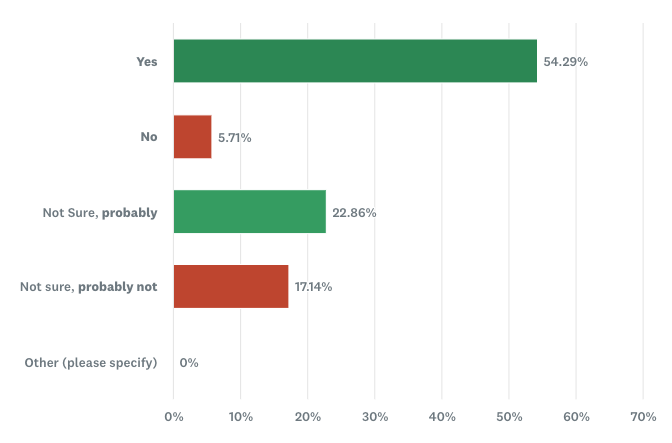
I wondered, myself, which states would not or would probably not take action and, to no surprise, 8 of 9 of these states are deeply red.
We wrapped up our state survey by asking two open-ended questions.
For those who say they are or probably will take actions regarding securing non-deployment funds…
What are the steps your state plans to or has already taken to ensure it retains non-deployment dollars?
Talked with other states to develop an approach.
Met with the NTIA to talk through the non-deployment dollars and what we would use them for. We have met with our some members of our congressional delegation to explain how we would use non-deployment dollars.
Congressional delegation and state (Gov/Lt Gov) are tracking our dealings and frustrations.
Coordinating with national delegation along with Governor's Office to gain support
Reaching out to federal delegation and White House
Noted Non-Deployment uses and language from statute in proposal.
Legislative Outreach to federal delegation. Working with advocates and partners to raise awareness and help with advocating for it as well as the Governor's Broadband Task Force on education, knowledge and advocacy. Preparing for the next state legislative session.
Through federal advocacy reaching out to our delegation and NTIA.
Actively working with its congressional delegation as well as working with red states to make sure the money remains with the states.
Official request from Governor to NTIA and White House advocating for retention of funds.
Discussions with congressional staff
Finally, we wondered, what have states been telling the Feds that they would use the non-deployment funds for, and there was no shortage of ideas and answers!
What would you use non-deployment dollars for in your state?
Implement our approved Digital Opportunity Plan
AI fiber routes/redundancy
We would like to use it to invest in programs that align with the administration such as AI initiatives.
Cellular Connectivity, Multi Dwelling Retrofit, last mile connections using alt tech due to issues with private roads and easements
Cybersecurity education, digital literacy, middle mile buildout, resiliency
Cybersecurity, AI Dev, Workforce Dev, Hardening of broadband infrastructure.
Internet exchange point; backhaul for middle mile; preferably digital access projects ie, digital navigators, device refurbishment and redistribution programs, affordability.
IXPs, Public/Private AI Center of Excellence - to include workforce component, Deployment for locations erroneously marked as funded by ReConnect or RDOF (census block awards still cause issues).
MDU Deployment Data Center Infrastructure Radio/Cell Tower updates to support the broadband backbones and availability in the scope of an emergency management space -out state rely on volunteers for ambulance and fire and without connect a they ability are not accessible and also having even a way to request services. AI Infrastructure, Security, etc.
Middle mile
Middle-mile infrastructure
Mobile cellular coverage, disaster response communications capacity, middle mile initiatives to support broadband expansion, technology improvements, and other related initiatives.
Next generation 911, cellular towers to boost connectivity, remote healthcare, precision agriculture and other emerging technology initiatives that can benefit the state and it's constituents.
Non-deployment initiatives align to Administration priorities like America's AI Action Plan and the America First Agenda
Non-deployment connectivity, AI, workforce development
Online safety and statewide cybersecurity; workforce development; AI; broadband infrastructure resiliency (cell towers and middle mile); rural healthcare and telehealth
Precision ag, AI
Primarily middle mile. We have other important uses as well - but those are even less desired by NTIA (Community Digital Navigator program)
Support broadband affordability, planning, workforce readiness, precision agriculture, data center growth, and network resilience.
Still being discussed.
Support of deployment activities, workforce development, middle mile infrastructure, digital skills training, device distribution (tied to the digital skills training)
TBD pending NTIA guidance - adoption efforts and digital skills / workforce training, supporting AI infrastructure, resilient critical infrastructure, and more.
These funds could be dedicated to Community Anchor Institutions (CAIs), Internet Exchange Points (IXPs) and/or capacity/technology/equipment upgrades to support the evolution of Artificial Intelligence (AI).
To implement our Digital Access and Workforce Development Plans.
We have not requested these funds and have never planned on having deployment money.
We'd align with US National Priorities. Energy Dominance, AI, Quantum, grid resilience.
Whatever eligible uses NTIA ultimately will allow.
Workforce development programs to prepare for digital careers, including cybersecurity and AI. Build a secure Internet Exchange Point on the Vermont National Guard base. Build resilient backbones. Train and provide infrastructure for Smart Farms, Telehealth, and Smart Grid. Provide devices and training.
Workforce development, Resiliency in our public safety network, Next gen. 911, K-12 education and connectivity.
Workforce development; Cybersecurity Supply Chain Risk Management; Public Safety;
Workforce training and a make-ready fund that would allow us to pay for pole-replacement and under-grounding costs that were anticipated but difficult to estimate during the sub-grantee selection process.
Correct RDOF and Reconnect mistakes.
The views and opinions expressed on broadband.io and in this article are those of the author and do not necessarily reflect the official policy or position of broadband.io, its officers, employees, or affiliates. If you have questions about this article, you can also email Doug at doug@broadbandmarketers.com.