Meet Devon, IL
In Illinois, Everybody Needs Some Broadband to Love
Devon Braunstein, Deputy Director, Illinois Department of Commerce and Economic Opportunity (DCEO), Office of Broadband is one of the country’s newest state broadband leaders, having taken the reins in May of 2024.
I wanted to catch up with her to see how her new role in managing a $1 billion BEAD allotment is progressing.
Matt Schmit, who was the original leader for Illinois broadband, left earlier this year in what might have been mischaracterized by some as leaving the fight for universal access. Not at all! Schmit simply moved his efforts to the Illinois Broadband Lab, a state partner focused on the same fight… but more on the Lab later.
Braunstein joined DCEO as an assistant deputy director in December, only to be advanced to a deputy director’s position six months later, where she oversees the Office of Broadband for the State of Illinois. “When I came on, the application process had closed for Connect Illinois round three,” explains Braunstein. “So, my role has been helping to finish up merit review, make awards, and now get grant agreements executed, get funds out the door, and help make sure that earlier projects that we funded were moving along nicely.”
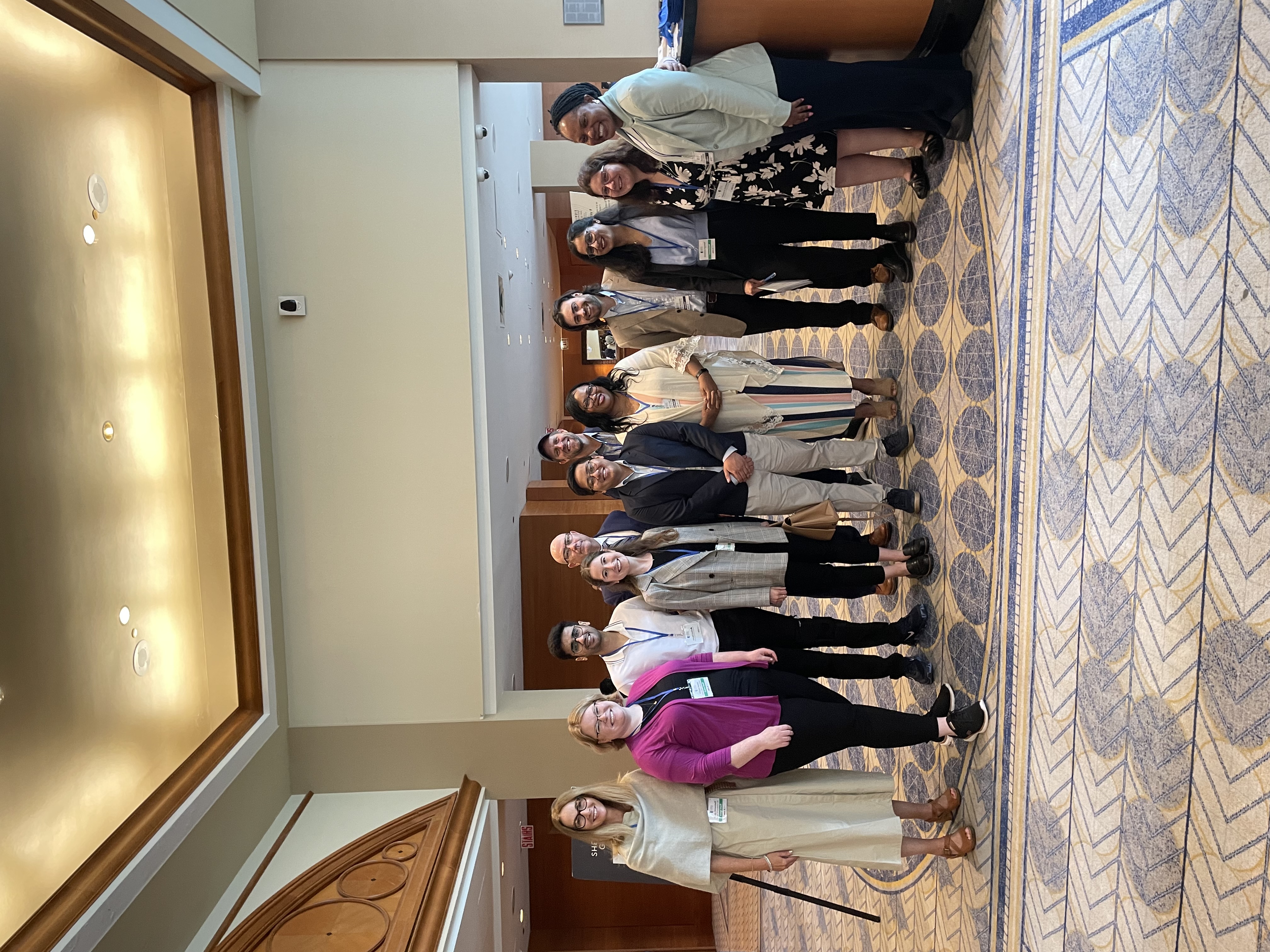
Hard Targeting Every Residence, Warehouse, Farmhouse, Henhouse, Outhouse and Doghouse!
Founded in 2019, Connect Illinois is the banner for which funds are allocated by the state to connect the unserved and underserved.
Awards from the first three rounds of Connect Illinois total more than $387 million, which is estimated to fund 80 projects and connect around 45,000 locations.
Funding sources include $253 million from the Capital Projects Fund, $46 million in other state funds, and $100 million in State Rebuild bonds.
Braunstein calls Rounds 1-3 of Connect Illinois great preparation for her office to tackle an even bigger investment. “The timing, workload, and added capacity needed to pull this off has prepared us well for what’s to come with BEAD. BEAD is considered ‘Round 4’ of Connect Illinois.”
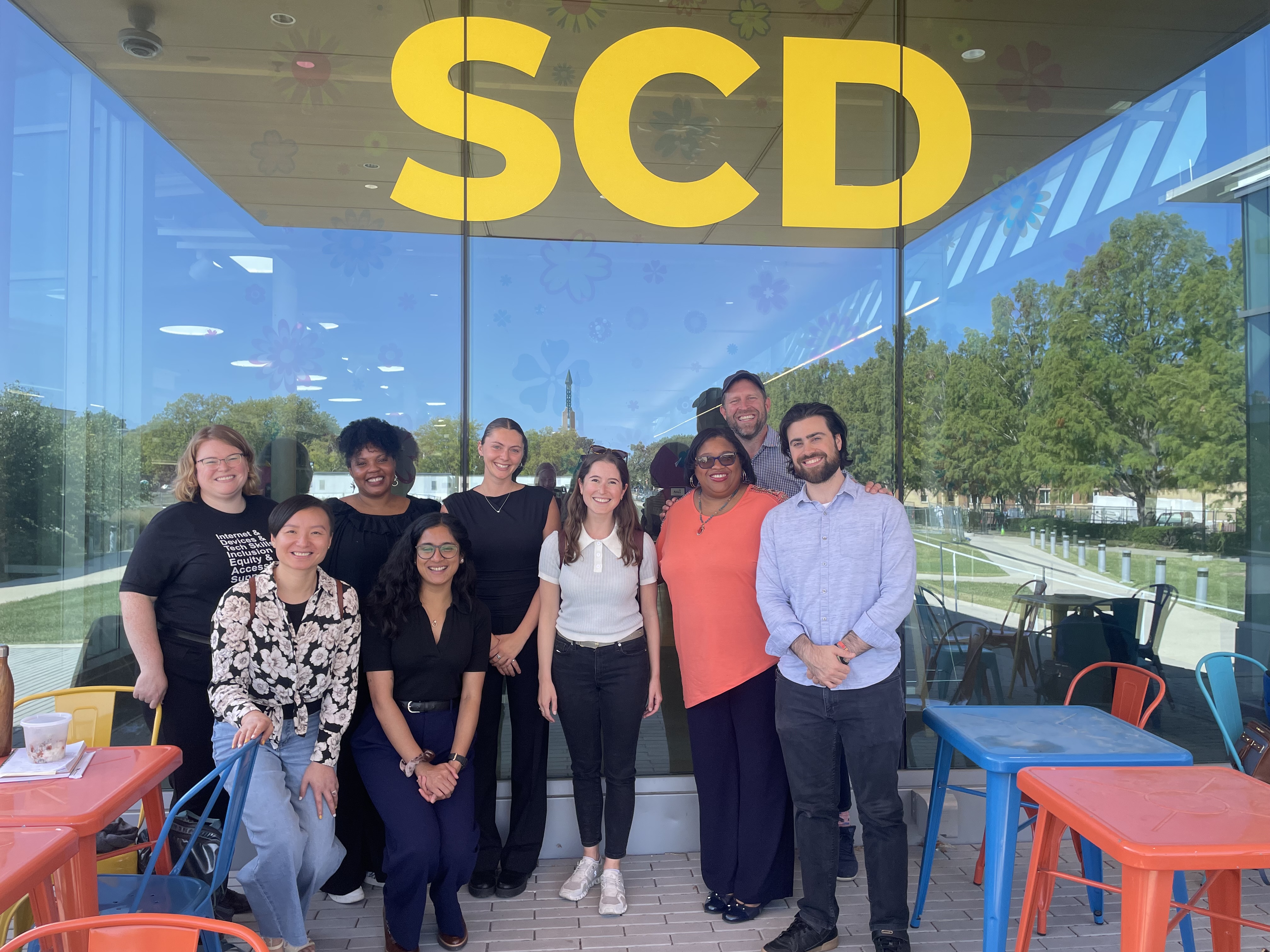
It Takes a Village
The Illinois Office of Broadband has 13 employees spread across the state with offices in Chicago and Springfield. This is an increase from two employees last year.
Reflecting on this team, Braunstein describes it as entrepreneurial and scrappy. “I've worked hard to prioritize giving folks independence and creativity, because we have a lot of really unique and important perspectives on the team.”
Braunstein explains that collaboration with outside organizations is critical to making an impact. This is why partnerships with organizations such as the Illinois Broadband Lab, driven by the Illinois Office of Broadband and the University of Illinois System, exist -- to increase capacity and expertise. Other valued partners include the University of Chicago and the Benton Institute for Broadband & Society.
One of the Lab’s key initiatives is called the Broadband Regional Engagement for Adoption and Digital Equity (READY) Program. The READY Program taps an Illinois Innovation Network campus in each of the state’s ten economic development regions to serve as a regional hub for broadband and digital equity project support.
“These campuses helped bring together stakeholders to weigh in, disseminate surveys, and pilot different programs,” says Braunstein.
Additional support from the Lab includes overseeing the broadband map, leading a statewide digital navigator program, as well as prepping communities to apply for broadband funding, which today is in the form of BEAD dollars.
Braunstein explains that the Illinois Broadband Lab encapsulates several years of community broadband planning and programming in Illinois. “Between our office, the Lab and the Benton Institute, there's a couple of generations of community broadband programming where local leaders are equipped with what they need to know about the basics of broadband, what questions they should be asking internet service providers... Now that BEAD is starting to roll, communities know those questions to ask.”
‘Bears’-ish on BEAD
Currently Illinois is in the final stages of the NTIA's review of BEAD eligible data/locations. Braunstein estimates the number of unserved and underserved BSLs will be between 165-170K.
Braunstein says reaching universal access will be ‘tight but achievable’ accounting for match dollars that supplement the $1 billion. “We're not a state that anticipates taking an all-fiber approach due to a combination of costs and geographies.”
She elaborates on geographical challenges, explaining that there are several remote locations, other rocky geographies, and heavy forest areas in Southern Illinois where the flexibility to identify the most appropriate broadband technology will come in handy.
The Chicago Illinois Way
Braunstein couldn’t be more complimentary of previous Connect Illinois rounds, attributing the anticipated success of BEAD in part to communities having years of experience mobilizing support and getting ready for broadband investments.
Often communities in Illinois are the primary driver to getting residents better broadband. Braunstein says they are “playing a role in their broadband destiny, rather than just letting it happen to them.”
These communities are partnering with providers and taking the lead in community-driven projects that meet household needs. They’re even providing letters of support to bolster funding applications.
Round and Round
In preparation for BEAD rollout, 41 participants were taken through a prequalification process, which is not a requirement but serves as a great head start for interested organizations. Project area units are small-ish with no more than five miles separating the two furthest locations from each other. Braunstein says that Illinois will accept applications for a single project area unit, but she sees these as ‘building blocks’ for an application that would cover several areas.
Illinois characterizes BEAD as ‘Round 4’ of Connect Illinois. Within this will be three waves of BEAD. Let's call them waves 1, 2, and 3 to avoid confusion.
In Wave 1, Illinois will accept all applications but will only score and preliminarily select applications that are end-to-end fiber and include a designated threshold of hard-to-serve project area units.
Braunstein explains that “we want to put these areas up front and give providers the opportunity to participate early and maybe get their first pick at locations. And so, then they can tackle some of these harder to serve locations.”
With NTIA BEAD map approval coming soon, Braunstein anticipates that the portal will be open and taking applications in January for at least a 30-day period. Braunstein says that high scoring applications with overlapping project areas will have the opportunity to de-scope their applications and resubmit in a ‘mini round’ (known as deconfliction) before the state moves on to Wave 2. “One learning from the previous Connect Illinois rounds was not to put all the pressure on one deadline. We want to let organizations have an opportunity to get comfortable with the application, apply, try again.”
For applicants to know what’s available in Wave 2, the Office of Broadband will publish an updated map reflecting preliminarily selected project areas (not recipients) to show applicants what’s still up for bid. Braunstein expects Wave 2 to be the bulk of awards because the participation criteria are more limited in the first wave.
Wave 2 will be open to any reliable broadband technology application. Braunstein guesses that there will be no shortage of wireless and other reliable technologies applying in this round. It is also where she says the state will define its ‘extremely high cost per location’ threshold.
The third wave will be a cleanup and negotiation phase to fill holes still on the unserved and underserved map. Depending on the interest in the first two waves, Wave 3 might not be needed.
A Bug’s Life
Devon is a South Jersey native who now finds herself in Chicago living with her Illinois-native husband, David, and their dog (a pit bull dachshund mix).
A graduate of Syracuse University where she studied communications, political science and marketing, Braunstein started her career at Deloitte in technology consulting. She says that the experience prepared her for getting up-to-speed in a position extremely quickly, which came in handy in the broadband office.
After a few years, Braunstein says she got the ‘public sector bug.’ I asked about the incubation period and if it was contagious, but apparently, she caught it from her mother who left her own career early-on in her life to work in the nonprofit sector. Braunstein explains that “…her voice has always been in my head to use all your efforts and talents for good. I kind of had a mindset of, ‘if I'm working this hard, I want to be working towards some sort of broader social impact.’”
This ‘bug’ led her to the New York City Department of Small Business Services, where she worked with small businesses on economic development and navigating regulatory agencies. “It sparked my interest in how a specific policy or structural change, even if it takes several years, can have a huge impact on thousands of people.”
Her success only made the bug spread and get worse which led her to study public policy at the University of Chicago where she would round out her skills with a more formal education in economics, statistics, and community policy.
A fellowship led Braunstein to the Mayor's Office in Chicago where she worked on the city's immediate and long-term broadband strategies as well as digital equity.
The work in the city office obviously caught the state broadband office’s attention while Braunstein herself was intrigued with the $1 billion investment and all the good that could/should come from it.
“People were born where they were born. And if they don't have a quality broadband connection to learn, to talk to loved ones, to work, they're just totally cut off from modern society and it's not right,” says Braunstein.
“I feel personally accountable to folks around the state. People are counting on us to do something meaningful,” says Braunstein. “That makes this an all-encompassing, 24/7 experience.”