Meet Brandy Reitter, CO
It’s a Long Way from LA DC to Denver
Author’s note: I guess you could say I was born in the summer of my 44th year when I moved my family to the Boulder, Colorado area in 2012. Since then, I’ve been fortunate to meet a lot of very talented broadband advocates and professionals in the Centennial State, including Brandy Reitter a little more than three years ago when she took over the Colorado broadband office.
I sat down with Brandy, officially the Executive Director of the Colorado Broadband Office, to catch up and learn just how close Colorado is to the finish line and turning in its final BEAD proposal to the NTIA. Turns out… very close.
She left yesterday behind her, you might say she was born again
Before taking over one of the longest running state broadband offices in the nation (operating since 2012), Reitter was serving as town manager in Eagle, Colorado, a culmination of 15 years serving in the public sector in rural Colorado. Eagle is in the heart of Colorado ski country.
She describes the transition to the state broadband role as post-pandemic motivated, which made her “want to do something else and be impactful. This position really spoke to me specifically in the sense that I could help unserved Coloradans connect to the internet. I built millions in infrastructure in my career, broadband being one of many.”
Reitter has been spearheading Colorado’s broadband office since February 2022, leading a remote-working staff made up currently of 14 employees.
Prior to ARPA/CPF or BEAD, Colorado had already invested $100 million dollars in state funding the last ten years through its “broadband deployment fund,” with the budget today reaching $14 million dollars annually.
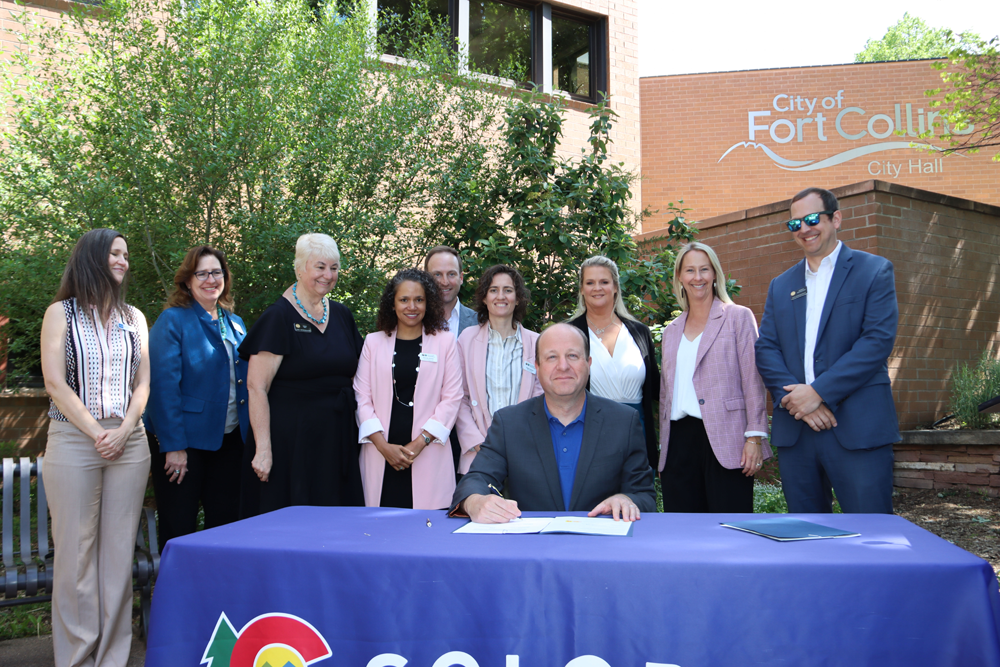
I've seen it rainin' fire in the sky (The Trump of it All)
I hate to use this bad pun (again) but right now, the elephant in the room is potential changes coming from the Trump administration to BEAD. So, I started my conversation with Reitter discussing the rumored and possibly looming changes to BEAD. Colorado’s plans to have its Final Proposal, subgrantees selected, and finalized in April.
“As for Colorado and application rounds, we’re done,” reports Reitter. “We closed our last application on February 28. We're done with planning, and so are the potential subgrantees. We've all spent a lot of time and money to get here.”
And then there is Elon Musk.
True or not, there’s chatter that Musk is pushing on BEAD to go from “fiber first” to “technology neutral,” a move that would benefit Musk’s Starlink satellite internet service. Currently reports suggest that this change is coming from commerce secretary Lutnick, whether or not Musk had any influence in this looming announcement.
“For Colorado, proposed changes would impact us. We’re already seeing significant alternative technology providers participate in our program, so any changes in the criteria would require Colorado to start over,” says Reitter. “The dynamics of Colorado is that it’s very hard to build infrastructure which requires us to be technology neutral in our BEAD program. This does not require changes to the fiber preference.”
Reitter expounds that, “In Colorado, alternative technology providers are showing up and applying,” says Reitter. “There's nothing about the current BEAD program, in my mind from a technology perspective, that is prohibiting a diversity of providers from applying.”
“Having to rework the program, changing the evaluation criteria, when we are this close to the finish line would significantly delay the program as we and everyone else would have to start over. We’re done with planning and will have shovels in the ground this summer, Colorado is ready to move forward,” says Reitter.
To Successfully Reach a Summit, Colorado SBO says to “Start Early”
Colorado started the CPF and BEAD processes with approximately 160,000 BSLs that needed to be connected. Now that a good deal of Colorado’s ARPA/CPF projects are complete or close to being finished, the investment will serve ~18,000 unserved/underserved BSLs. This lowers the number of BSLs that BEAD and Colorado’s allotted $862 million will need to reach to ~145K locations.
A critical piece to why Colorado is so far along into the BEAD application process is that
CBO made sure to complete the challenge process required in Volume 1 and gained NTIA approval early, before Volume 2 was even submitted.
Reitter credits turning Volume 1 in “really early” and says that “…we wanted to have the challenge and BSLs set before Volume 2 was submitted for a more accurate plan as well as avoiding waiting for a map that could potentially eat into our year deadline.”
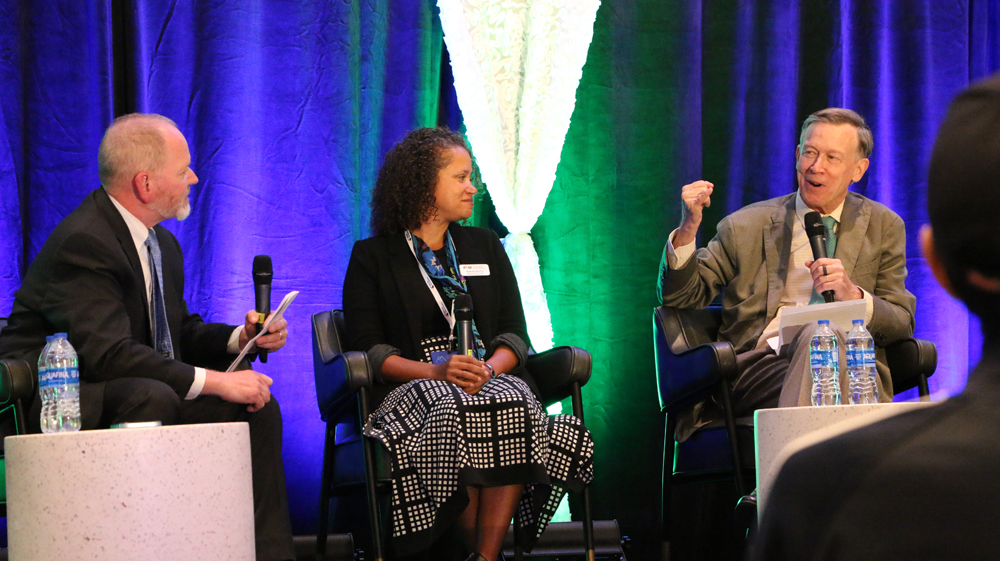
Hey… This is Red Rocks
Round one netted only half of the BSLs needing to be covered by BEAD, not particularly surprising given the difficult terrain and wireless-blocking mountains in Colorado, making lots of BSLs “high cost.” Round one received interest in the form of 185 applications, 139 of which were fiber builds. Round 1 will bring service to approximately 78K BSLs.
Turning the page to Round 2, Reitter and her team worked with the NTIA to put programmatic waivers in place that would encourage more participation because, “it was the only way to encourage more applications and more coverage. If we ran Round 2 with the same parameters as Round 1, we would not have received additional grant applications.”
These waivers included giving potential subgrantees the ability to apply for partial versus 100% of project areas. In essence, high-cost single locations or areas could be removed to make projects feasible. Round 2 was amended to take a market-based approach instead of creating CBO’s best guess project area boundaries required by the NTIA.
Sunshine… and Better Broadband Connection… Makes Me Happy
Reitter said that Round 2 applications were significantly up compared to Round 1, “Those programmatic waivers really helped.”
More specifically, Round 2 applicant intake results were announced Friday (March 14) and netted…
96 applications from 22 organizations.
Nearly $649 million in funding was requested.
Matching funds ($176 million) bringing the proposed investment to $825 million.
Applications proposing to service 94,080 of the 104,269 BEAD eligible locations post-round-one (60,165 unserved, 33,915 underserved).
To shore up numbers of BSLs that need to be connected, Colorado is currently inviting providers to participate in the Public Notice process to perfect our BEAD map to help ensure the most accurate data as possible.
In the end, Reitter guesstimates that fiber builds will constitute 85 to 90% of BSLs with wireless and satellite most likely closing the gap.
An optimistic Reitter anticipates BEAD builds could begin by late this summer, if we stay the course and are allowed to continue forward.
Wrapping Up BEAD Planning will be a Colorado Rocky Mountain High
Born and raised in Denver, Reitter describes herself as a “city girl who happens to also love Colorado’s rural mountain communities.”
Today, she lives in Eagle with her husband, giving her the unique perspective of what rural areas in the state need.
Reitter grew up in some ‘less than affluent areas’ of Denver. “I grew up in a socioeconomic disadvantaged environment where I know what it looks like when you don't have resources, and I'm a product of that. I had to claw my way to the ‘top,’ making me especially empathetic for those in Colorado who need the internet to advance their own lives.”
When forced to think about it, Reitter says that “I bring the perspective as a child who got left behind, I was the last to get what I needed to be successful. This program, this job speaks to the poor kid who got a refurbished computer and dial up internet last. What we're working on is really unique and inspiring.”