Meet Kelly, WV
Almost (Broadband) Heaven… West Virginia
Director of the West Virginia Office of Broadband Kelly Workman has been working in state offices since 1997 when she started in state economic development where she has held numerous roles.
Before joining state economic development, Workman also worked in the state legislature, the Department of Administration, and the Contractors Association of West Virginia. “I've been in economic development within the same agency for most of my career, but the work and its requirements are always changing.”
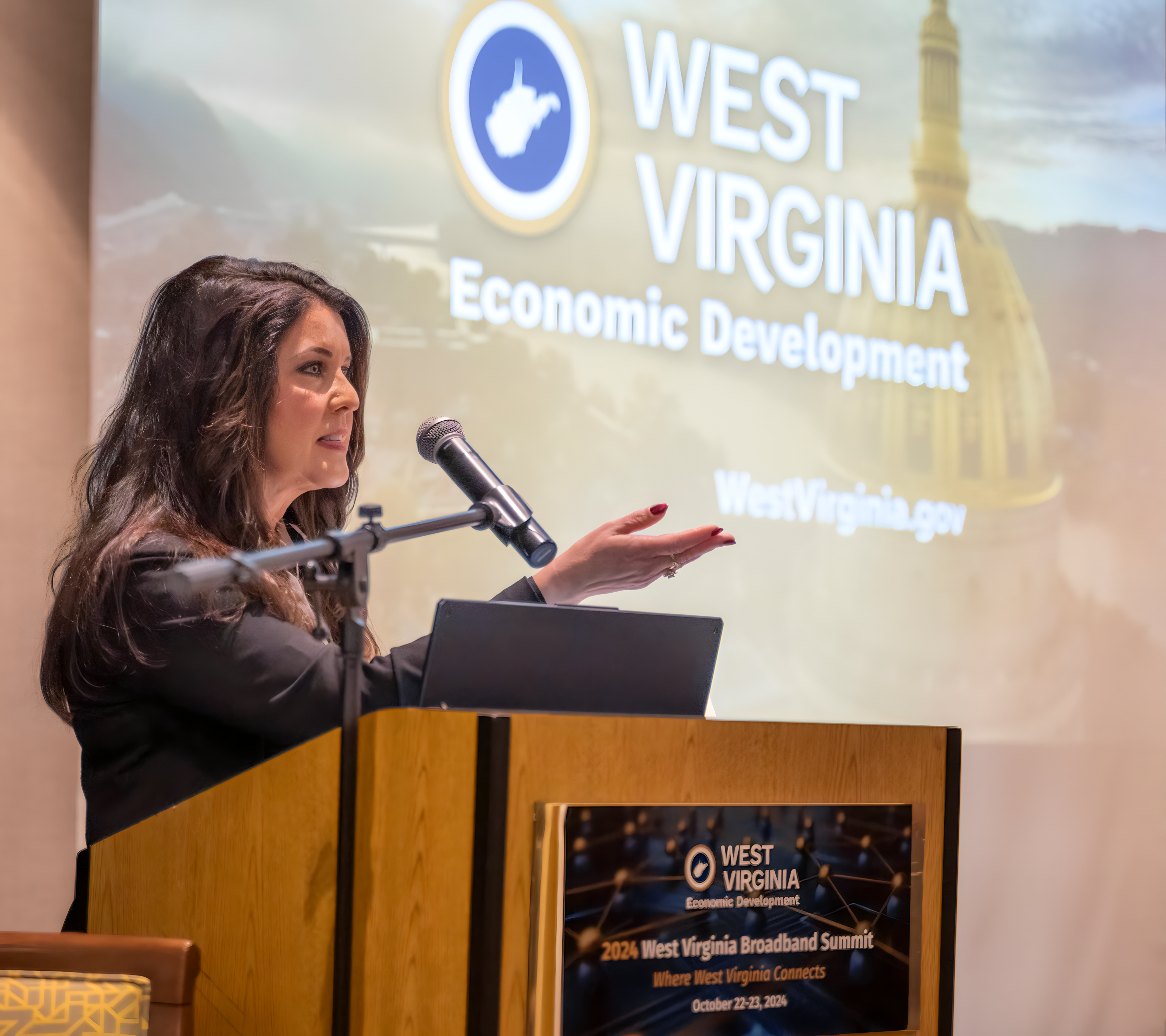
In a rare interview, Workman tells broadband.io that she was first exposed to the critical nature of broadband working with both Housing & Urban Development and the Appalachian Regional Commission. “HUD was one of the first federal agencies to start talking about broadband,” says Workman. “I was the point person within the development office to create programs for utilization of broadband federal funding and was tasked with being the agency liaison to the newly formed West Virginia Broadband Enhancement Council, which is still active today.”
West Virginia’s Office of Broadband is housed within the West Virginia Department of Economic Development and works hand in hand with the broadband council, which is made up of agency heads and public members who represent different constituencies from around the state.
Workman says broadband responsibilities including disbursing ARPA and BEAD dollars have increased her office from a couple of people in 2021 to ~10 people today.
The broadband office is responsible for administration of federal and state broadband grant programs and works with the council to make recommendations to the West Virginia legislature. The WV broadband team currently administers nine different federal programs through four different federal agencies. Mostly in Charleston, WV, Workman says that “there's no substitute for having a really talented team that cares about improving the entire state and our team reflects that attitude.”
…Blue Ridge Mountains, Shenandoah River
Workman notes that all of West Virginia is part of the Appalachian Regional Commission (ARC). Many communities in the state were developed and built along the banks of rivers during the state’s early industrial development. The southern part of the state is mountainous (and more challenging to get broadband to) while the rest of the state are more “gently rolling hills.” Much like its neighbor Kentucky, areas of low population density connect many of West Virginia’s rural communities.
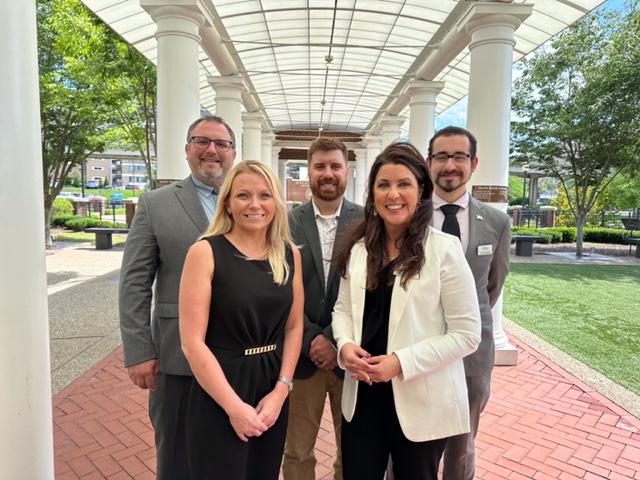
“Low population density is of course a challenge – but not insurmountable – because our attitude has been that broadband is just like other infrastructure. If we can run water systems to these communities, electricity to these communities, we're going to get broadband to these communities. There's no question about it,” says Workman.
Fortunately for the state, Workman reports that ever since 2016, the state and the Broadband Council has been diligently working to increase statewide availability of middle mile infrastructure. “Previously, when we looked at maps of long-haul fiber in this region, there was kind of a donut hole around West Virginia. That’s changed with long-haul routes now in place.”
Life is Old There, Older than the Trees (Preparation Meets Opportunity)
For more than five years prior to BEAD allocation announcements, the West Virginia broadband office was hard at work mining data and improving the state’s broadband mapping.
Workman says that this helped West Virginia to provide numerous successful challenges to the initial FCC map, resulting in a far greater BEAD allocation than they would have received without them. “…we were able to identify additional unserved locations and increase that allocation to ensure that we have sufficient funding. When we had the opportunity to provide input on broadband connectivity throughout the state, West Virginians responded. Our work over the past several years has really been a case of preparation [mapping] meets opportunity [BEAD funding].”
The state’s ARPA (CPF) funding numbered 136.3 million. Combined with a legislative allocation of State and Local Fiscal Recovery (SLFRF) funding, recent projects have taken ~40K locations off the unserved and underserved map, with allocations, focused mostly on the unserved, going to 42 projects in 41 counties.
Take Me Home… Country Roads BEAD
With a healthy $1.2 billion in funding, BEAD will need to cover (post NTIA approval) 114,178 locations. This breaks down to 97,000 unserved and about 15,000 underserved. Workman reflects that this should be enough to reach everyone, mostly with fiber.
“When you start from a deficit, the deployment of fiber infrastructure is the primary concern for our state,” explains Workman. “And with BEAD requiring an end-to-end fiber solution [as a first priority], we are optimistic that we will be able to deliver fiber to most.”
The state’s Volume 2 was approved on April 18th, making the state one of the first to receive approval. That’s great, but the reality is that this makes West Virginia one of the first with a final proposal due. Currently, that gives West Virginia five months to wrap everything up.
Initial subgrantee applications were due October 24th, which led into a “planned extension” phase that runs through December 19th. Concurrent with application review, this planned extension allows for ‘cleanup’ where applicants have time to reconsider some locations and while the broadband office engages applicants for discrete locations that need a solution. Companies that are in closest proximity to BSLs that need service may be approached by the state as these providers would make the most sense.
“Basically, we’re working to cover any regions or areas in which we did not receive a viable project application or no project application,” explains Workman. “This gives us an opportunity to review what came in with that full application round and find coverage solutions. We had great initial interest, but there are a few areas we need to shore up.”
Workman caveats that while there were holes in proposed coverage, “…there was no shortage of interested parties [mostly West Virginia based] as the amount requested well exceeded the $1.2 billion available.”
Workman reflects on the process to get full participation from West Virginia carriers, large and small. “We took the time to conduct a great deal of training on the BEAD program to clarify federal regulations that weren't always clear. We worked hard to provide a level of assurance that we're in this together.”
…To the Place I Belong
Following the close of the ‘planned extension’ round on December 19th, Workman says the office will move forward with recipients in what they are calling a pre-award stage in January. She also describes a rather lengthy process (one that makes me wonder how anyone meets a 365-day turnaround) that includes public comment, getting everything certified by the governor, and more by the state’s April deadline.
She hopes to secure NTIA approval and get all projects under contract by the summer of 2025, at which point subgrantees can begin developing their completed designs. Construction won’t likely begin before 2026 given legal requirements and various required tasks completed including things like the environmental review process.
“The measure of our success is actually connecting users,” says Workman. “That's what all West Virginians are going to hold us accountable for.”
Workman estimates that after all is said and done, there will be non-deployment funds available, mostly to be directed to support broadband workforce development and digital equity programs.
Mountain Mama
Born and raised in West Virginia, Kelly currently lives in Charleston with her husband. They have two daughters, including a college senior and one that is out of the house and actually pays her own cell phone bill!
She’s been at it (the public sector) for a long time, so I asked her what motivates her to stick with it. She explains that “I wake up every day excited about the progress that we've made, the success of our programs, and the relationships we've built. There’s a satisfaction to be able to drive through the state and point to results of important projects I worked on and understand the value those projects bring to communities throughout the state”
And as an aside, she enjoys a good joke about the eighties, so I love/relate to that! Make sure every time you reach out, bring an eighties joke!